
The fastest, lowest-risk path to pharmacogenomics in Meditech Expanse is a standards-first middleware pipeline that converts lab VCF or XML output into HL7v2 LRI Clinical Genomics messages or FHIR R4 Genomics profiles, then drives in-chart clinical decision support through CDS Hooks or SMART-on-FHIR. EHR-lab integrations for genetic testing reduce operational friction, speed clinician access to actionable results, and create a single source of truth inside the clinical workflow.
To execute this approach, your team needs five elements in place:
- Standards layer: HL7v2 LRI Clinical Genomics (current) and FHIR R4 Genomics IG (forward path)
- Conversion middleware: vcf2fhir or hl7v2GenomicsExtractor to transform VCF/XML into structured EHR-ready messages
- Lab onboarding: test catalog alignment, order mapping, and result format negotiation
- CDS knowledge source: an authoritative drug-gene knowledge base (e.g., FDB) or a PGx reporting platform that emits evidence-graded recommendations
- Clinical governance: medical director sign-off, audit trail, and a living reanalysis plan
Typical timeline from planning through go-live runs several months, depending on lab readiness and interface complexity.
Key Takeaways
A standards-first middleware pipeline converting lab VCF or XML into HL7v2 LRI or FHIR R4 Genomics payloads is the lowest-risk, most maintainable path to pharmacogenomics in Meditech Expanse.
| Point | Details |
|---|---|
| Standards-first architecture | Use HL7v2 LRI Clinical Genomics now; plan a FHIR R4 Genomics path as the IG matures. |
| Structured data is non-negotiable | Meditech's drug-gene CDS engine requires discrete OBX observations, not PDF attachments, to fire alerts. |
| Conversion middleware is required | Tools like vcf2fhir and hl7v2GenomicsExtractor transform VCF/XML into HL7v2 LRI OBX observations for EHR ingestion. |
| Governance sustains the integration | Medical director sign-off, versioned guidelines, and living reanalysis keep PGx guidance clinically current after go-live. |
| SignalPGx accelerates delivery | SignalPGx emits HL7v2 LRI and FHIR outputs with living reanalysis and audit trails, typically live within 5–7 days of lab onboarding. |
Table of Contents
- What does Meditech Expanse Genomics provide for PGx workflows?
- Which integration patterns work best for Meditech PGx integration?
- How do genomic results map to HL7v2 OBX sections and EHR fields?
- How does lab onboarding change clinician workflows in Expanse?
- What does a solid testing and go-live plan look like?
- What are the most common Meditech PGx implementation pitfalls?
- How does SignalPGx fit into a Meditech PGx integration?
- What real-world Meditech PGx deployments can you reference?
- The governance model that actually makes PGx sustainable in the EHR
- SignalPGx reduces time-to-value for Meditech PGx projects
- Sources
- FAQ
What does Meditech Expanse Genomics provide for PGx workflows?
MEDITECH Expanse Genomics is a native EHR module that handles the full PGx workflow loop without requiring clinicians to leave the chart. The module supports test ordering, discrete genetic result storage, pharmacogenomic drug-gene checking, and clinician-facing result summaries. MEDITECH has collaborated with FDB to embed pharmacogenomic decision support directly into Expanse prescribing workflows, enabling automatic drug-gene alerts and evidence-based recommendations at the point of care.
Expanse presents PGx results in several ways: structured in-chart summaries tied to the patient's medication list, passive or active CDS alerts during prescribing, and links to full PGx reports for deeper review. The module is also integrated with oncology matching and pathology workflows, so genomic data can serve both somatic and germline use cases within the same platform.
The critical constraint to understand before you begin: Expanse expects structured, discrete genetic data to trigger CDS. When labs send PDF attachments instead of structured HL7 or FHIR payloads, the drug-gene checking engine cannot fire. This is the single most common reason PGx integrations stall after go-live.
Pro Tip: During your discovery phase, map the minimum PGx data elements Meditech needs to trigger a CDS alert: at minimum, a structured OBX segment carrying the gene symbol, diplotype or haplotype, and phenotype (e.g., CYP2C19 poor metabolizer). Confirm your lab can produce these fields before committing to an interface build.
Which integration patterns work best for Meditech PGx integration?
Four integration patterns are in active use for connecting PGx labs to Meditech Expanse. Each carries different tradeoffs on data granularity, CDS behavior, deployment complexity, and long-term maintenance.
| Integration Method | Data Granularity | CDS Behavior | Deployment Complexity / Timeline | Maintenance (Living Reanalysis) | Security & Compliance |
|---|---|---|---|---|---|
| HL7v2 LRI Clinical Genomics | Structured discrete variants, haplotypes, phenotypes, therapeutic recommendations | Inline active alerts via Expanse drug-gene engine | Moderate; 8–14 weeks with interface engine | Requires versioned message updates when guidelines change | HIPAA-compliant; audit trail via interface engine logs |
| FHIR R4 Genomics IG | Structured variants via DiagnosticReport + Observation profiles; PDF fallback still common | Active or passive depending on CDS Hooks implementation | Higher; 14–20 weeks; FHIR server required | Forward-compatible; easier to update profiles as IG matures | OAuth, SMART scopes; strong audit support |
| SMART-on-FHIR + CDS Hooks | Full structured or summary-level depending on app | Passive in-chart recommendations via CDS card; no native Expanse alert | Moderate-high; app development or vendor app required | App-layer updates; decoupled from EHR release cycle | App-level HIPAA controls; token-based access |
| Custom API / point-to-point | Variable; often PDF or semi-structured | Passive consult document; no automated CDS trigger | Low initial; high long-term; brittle to lab or EHR changes | Manual; no living reanalysis without custom engineering | Depends entirely on implementation; audit gaps common |
The FHIR Genomics Implementation Guide defines R4 profiles for genetic test orders and results, though some workflows still restrict results to DiagnosticReport PDF while the IG matures toward fully structured genomics content. Plan for a hybrid pipeline: HL7v2 LRI today, FHIR-first as your lab and EHR ecosystem catches up.
Pro Tip: Choosing a standards-first path (HL7v2 LRI or FHIR) protects your engineering investment. When you switch reference labs or update your PGx panel, the interface contract stays the same — only the content changes. Custom API builds require re-engineering from scratch each time.
For a deeper look at FHIR and CDS Hooks integration patterns, the technical tradeoffs are worth reviewing before your architecture decision.
How do genomic results map to HL7v2 OBX sections and EHR fields?
The HL7v2 LRI Clinical Genomics component organizes PGx observations across five OBX sections. Section 1 carries patient and specimen demographics. Section 2 holds variant-level observations: HGVS notation, VCF fields (chromosome, position, reference/alternate allele), and ClinVar IDs. Section 3 contains haplotype and diplotype assignments using star-allele notation (e.g., CYP2C19*1/*2). Section 4 carries phenotype terms (e.g., intermediate metabolizer, poor metabolizer) mapped to standardized vocabulary. Section 5 holds therapeutic recommendations, including drug-gene interaction summaries and prescribing guidance.
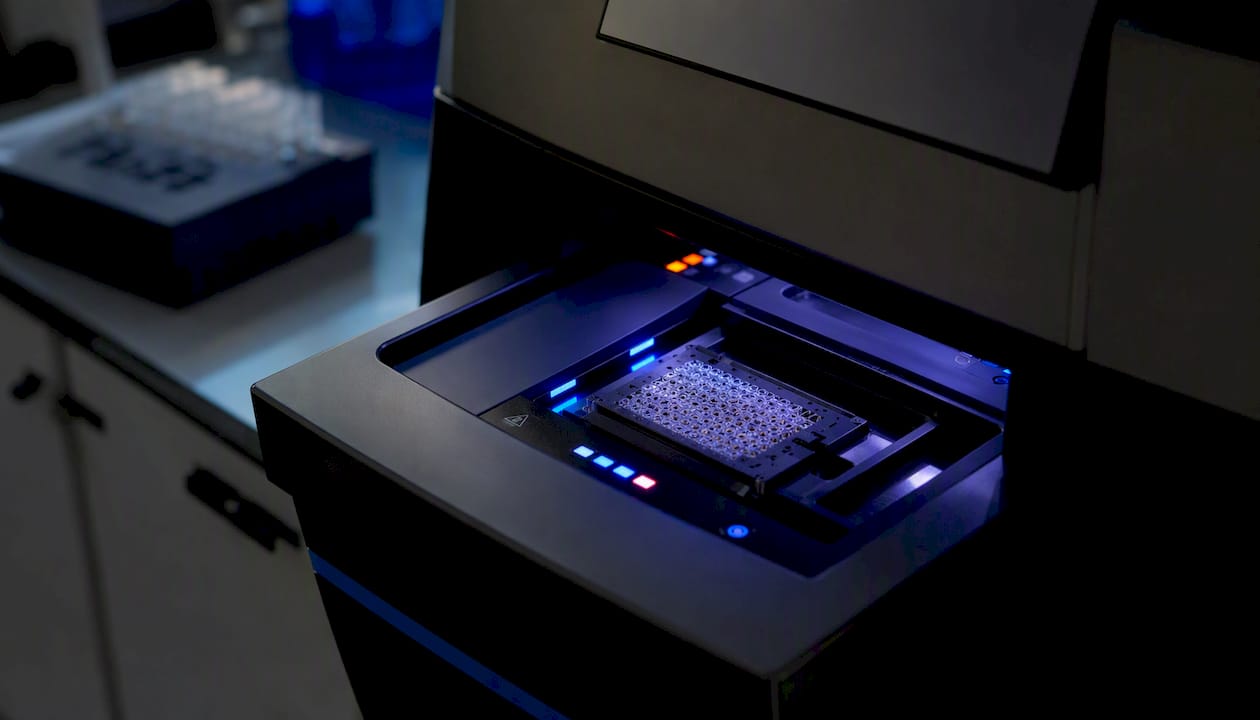
An open-source converter extending vcf2fhir into hl7v2GenomicsExtractor has been used to transform annotated VCF and lab XML into HL7v2 LRI OBX observations, enabling automated pipeline delivery of structured variant data and clinical annotations into an EHR genomics module. VCF is the practical lingua franca for NGS output, but Meditech does not accept native VCF — this conversion step is non-negotiable.
Key identifiers and formats your mapping must produce:
- Test identification: LOINC codes for each PGx panel or gene assay
- Variant representation: HGVS c. and g. notation, VCF CHROM/POS/REF/ALT fields, ClinVar variant IDs where available
- Allele and haplotype: star-allele notation per CPIC nomenclature (e.g., CYP2D6*4/*4)
- Phenotype: standardized terms (ultrarapid, normal, intermediate, poor metabolizer; likely poor metabolizer for copy number variants)
- Therapeutic recommendation: drug name, interaction classification, and prescribing guidance text
For a detailed walkthrough of the genotype-to-guidance pipeline, the mapping steps from raw genotype to clinical recommendation are covered in depth.
Mapping verification checklist:
- Variant fidelity: confirm HGVS notation matches source VCF for each test gene
- Allele-to-phenotype consistency: verify diplotype maps to the correct CPIC phenotype bin
- Therapeutic recommendation presence: confirm at least one OBX-5 recommendation per actionable gene-drug pair
- LOINC code accuracy: validate each test OBX-3 against the LOINC database
- Order linkage: confirm ORC/OBR segments correctly reference the originating PGx order in Expanse
How does lab onboarding change clinician workflows in Expanse?
Lab onboarding for a Meditech PGx integration follows a structured sequence. First, align the test catalog: map each PGx panel to Meditech order codes and confirm LOINC assignments. Second, negotiate result format: require structured HL7v2 LRI or FHIR payloads from the lab, not PDF attachments. Third, establish specimen and order mapping so Expanse can link results back to the originating order. Fourth, execute security and consent agreements covering genetic data handling, HIPAA Business Associate Agreements, and patient consent workflows for germline testing.
Interface options for the data handoff include:
- Point-to-point HL7: direct TCP/MLLP connection between lab and Meditech; simple but brittle
- Interface engine with transformation: Rhapsody, Mirth Connect, or similar middleware handles message transformation, routing, and error management
- Cloud broker / integration platform: managed integration services that handle HL7-to-FHIR conversion and routing
- FHIR-based exchange: lab FHIR server exposes DiagnosticReport resources; Meditech pulls or subscribes
Once results flow in as structured data, the clinician encounter changes in three concrete ways. During ordering, the clinician selects a PGx panel from the Expanse order catalog, and the order routes to the lab with the correct specimen requirements. At prescribing, Expanse fires drug-gene CDS alerts when a patient's stored phenotype conflicts with a prescribed medication. Between encounters, the clinician can review the in-chart result summary and access the full PGx report without leaving Expanse.
Typical lab onboarding milestones:
- Discovery and gap analysis (weeks 1–2): catalog alignment, format assessment, consent workflow review
- Interface specification and build (weeks 3–6): message mapping, middleware configuration, test environment setup
- Lab connectivity testing (weeks 7–9): send/receive validation, error handling, acknowledgment testing
- Clinical workflow configuration (weeks 10–12): CDS rule activation, alert tier configuration, clinician training materials
- UAT and go-live (weeks 13–16): acceptance testing, sign-off, production cutover
What does a solid testing and go-live plan look like?
Technical UAT must validate the full message path before any clinical use. Start with HL7 or FHIR payload validation: confirm each OBX segment is well-formed, LOINC codes are correct, and HGVS notation is syntactically valid. Run end-to-end message flow tests from lab submission through Meditech ingestion to CDS trigger. Test error handling explicitly: send malformed messages, missing OBX segments, and duplicate results, then confirm the interface engine routes errors to a monitored queue rather than silently dropping them. Verify audit logging captures every message transaction with timestamps and user context.
Clinical validation requires a separate track. For each gene-drug pair in your panel, reconcile the variant call against the expected phenotype assignment, then confirm the therapeutic recommendation matches current CPIC or FDA biomarker labeling guidance. Run sample clinical scenarios for each target specialty: for example, a cardiology scenario testing clopidogrel/CYP2C19 interaction, a psychiatry scenario testing sertraline/CYP2C19, and a pain management scenario testing codeine/CYP2D6.
Acceptance criteria to track:
- CDS trigger accuracy: alerts fire for all actionable gene-drug pairs in test scenarios
- False positive rate: alerts do not fire for non-actionable or normal metabolizer phenotypes
- Medication change rate: track prescribing changes attributable to PGx alerts post-go-live
- Time-to-insight: measure elapsed time from specimen collection to structured result available in chart
Production go-live checklist:
- Rollback plan documented and tested: confirm you can revert to PDF-only workflow within 2 hours
- Clinician training completed: at minimum, ordering workflow, alert interpretation, and report navigation
- Monitoring dashboards live: message volume, error rate, CDS trigger counts, and alert override rates
- On-call escalation path defined: interface engine team, lab contact, and clinical informatics lead identified
- Post-go-live review scheduled: 30-day checkpoint to assess alert burden and clinical adoption
What are the most common Meditech PGx implementation pitfalls?
PDF-only lab reports are the most disruptive problem teams encounter. The mitigation is contractual: require structured HL7v2 LRI or FHIR payloads as a condition of lab onboarding. If a lab cannot produce structured output, use a PGx reporting platform that ingests raw genotype data and emits structured messages on the lab's behalf.
Variant representation variability across labs creates mapping inconsistencies. Normalize all variants to HGVS notation and validate against a reference database (ClinVar, PharmVar for star alleles) before ingestion. Build normalization into your middleware layer so Meditech always receives consistent identifiers regardless of the source lab's output format.
Reanalysis and versioning require a governance policy before go-live. When CPIC updates a guideline or the FDA adds a new biomarker label, previously reported phenotypes may carry different therapeutic implications. Define re-notification criteria (which guideline changes trigger patient re-contact), version your reports, and maintain an audit trail of which guideline version supported each recommendation.
Privacy and consent for genetic data go beyond standard HIPAA controls. Genetic information warrants role-based access controls limiting chart visibility to treating clinicians, encryption at rest and in transit, and explicit patient consent documentation for germline testing. Your security and compliance framework should address all three.
Pro Tip: Reduce alert fatigue without sacrificing safety by tiering your CDS: reserve active interruptive alerts for high-severity, actionable gene-drug pairs (e.g., codeine contraindication in CYP2D6 poor metabolizers) and deliver lower-acuity guidance as passive in-chart summaries. Clinicians respond more reliably to fewer, higher-signal alerts.
How does SignalPGx fit into a Meditech PGx integration?
SignalPGx functions as the reporting and integration layer between your laboratory's genotype output and Meditech Expanse. The platform ingests raw VCF or genotype data, normalizes variants to HGVS and star-allele notation, applies evidence grading across 20+ sources including CPIC and FDA biomarker labeling, and emits structured HL7v2 LRI or FHIR R4 Genomics payloads that Meditech can ingest directly. This removes the conversion and evidence-curation burden from your interface team.

SignalPGx supports multiple integration patterns: HL7v2 LRI output for current Expanse deployments, FHIR Genomics payloads for forward-looking architectures, and API/webhook options for custom middleware configurations. The platform's medication intelligence graph drives evidence fusion across gene-drug pairs, and living reanalysis automatically updates recommendations when CPIC or FDA guidance changes, without requiring a new lab order.
Typical implementation touchpoints with SignalPGx:
- Lab onboarding (days 1–7): genotype file format review, test catalog mapping, credential setup
- Variant normalization and report configuration (days 7–14): HGVS mapping, phenotype bin assignment, report template configuration
- HL7/FHIR output validation (days 14–21): test message review, Meditech ingestion testing, CDS trigger verification
- Clinical validation and UAT (weeks 4–6): scenario testing, medical director review, audit trail confirmation
- Go-live and monitoring (week 7+): production cutover, alert monitoring, living reanalysis activation
Evaluation criteria for a vendor-integrated PGx approach:
- Time to value: can the vendor deliver structured HL7/FHIR output within days, not months?
- Evidence coverage: does the platform draw from CPIC, FDA biomarker labeling, DPWG, and other authoritative sources?
- Living reanalysis: are guideline updates applied automatically, with versioning and audit trail?
- Audit support: does the platform maintain a medical director review trail for every report?
- White-label deployment: can your lab brand the reports and patient-facing outputs?
For labs evaluating build versus buy for PGx reporting, the vendor-integrated path typically reduces time-to-go-live and ongoing maintenance burden compared with custom-built pipelines.
What real-world Meditech PGx deployments can you reference?
Health systems including Frederick Health and Golden Valley Memorial have deployed MEDITECH Expanse Genomics and begun integrating PGx capabilities into clinical care, demonstrating that in-EHR pharmacogenomics is operationally feasible at community health system scale, not just academic medical centers.
On the open-source side, the vcf2fhir and hl7v2GenomicsExtractor tools provide a published, peer-reviewed reference implementation for converting VCF to HL7v2 LRI OBX observations. Teams building custom middleware can use these tools as a starting point and adapt them to their lab's specific output format.
Key implementation references:
- HL7v2 LRI Clinical Genomics component: defines OBX section structure and required fields for genomic results
- FHIR Genomics Implementation Guide: R4 profiles for genetic test orders and results
- MEDITECH Expanse Genomics product documentation: native module capabilities and ordering workflows
- FDB Pharmacogenomics CDS: drug-gene knowledge base embedded in Expanse
- Meditech customer news and collateral: deployment examples and product materials for discovery
The governance model that actually makes PGx sustainable in the EHR
Most Meditech PGx integration projects invest heavily in the technical pipeline and underinvest in clinical governance. The result is a system that works on go-live day and drifts out of clinical alignment within 18 months as guidelines update and the team that built the interface moves on.
The governance model worth defending has three pillars. First, medical director sign-off on every report template and CDS rule configuration, with a documented audit trail linking each recommendation to the guideline version that supports it. Second, a defined process for monitoring CPIC, FDA biomarker labeling, and DPWG updates and translating them into versioned report and alert changes, with re-notification criteria agreed in advance. Third, quarterly metrics review: CDS trigger rate, alert override rate, medication change rate attributable to PGx guidance, and any safety events where PGx data was available but not acted on.
The guideline question deserves more attention than it usually gets. CPIC, FDA biomarker labeling, and DPWG do not always agree on phenotype-to-prescribing recommendations, and choosing which source governs each gene-drug pair is a clinical decision, not an IT decision. Your medical director needs to own that choice and document it. For a structured look at which PGx guidelines to use and how to reconcile conflicting sources, that decision framework is worth working through before your first CDS rule goes live.
Living reanalysis is the other governance element teams consistently underestimate. A patient's stored phenotype is only as current as the guideline that interpreted it. When CPIC revises a recommendation, your system needs a defined path to update that patient's record and notify the care team if the clinical implication changes. Without that path, your PGx integration becomes a static snapshot rather than a living PGx report that earns ongoing clinical trust.
SignalPGx reduces time-to-value for Meditech PGx projects
Labs and health systems that have worked through the architecture above know the hardest part is not the standards knowledge — it is the sustained engineering effort to normalize variants, maintain evidence currency, and keep HL7/FHIR outputs aligned with a changing guideline landscape. SignalPGx was built to absorb exactly that burden.
The platform delivers physician-reviewed, evidence-graded PGx reports with HL7v2 LRI and FHIR outputs ready for Meditech ingestion, typically within 5–7 days of lab onboarding. Living reanalysis runs automatically as CPIC and FDA guidance evolves, so your CDS stays current without manual re-engineering. Every report carries a medical director audit trail and full HIPAA compliance, including role-based access controls and encryption at rest and in transit.
If your team is evaluating a white-label PGx reporting platform that integrates directly with Meditech Expanse, SignalPGx is worth a direct conversation. Book a demo to see the integration architecture in practice.
Sources
- Implementation of an open-source converter (vcf2fhir -> hl7v2GenomicsExtractor) to deliver genomic variants and annotations into EHRs
- MEDITECH Genomics | MEDITECH
- Pharmacogenomics | PGx Patient Care | FDB (First Databank)
This article is general information, not a substitute for advice from a qualified doctor. Consult a qualified healthcare professional about your own circumstances before acting on anything here.
FAQ
What is the recommended integration method for Meditech PGx?
HL7v2 LRI Clinical Genomics is the most practical current method, using tools like hl7v2GenomicsExtractor to convert VCF or lab XML into structured OBX observations that Meditech Expanse can ingest and use to trigger drug-gene CDS alerts.
Why can't labs just send PDF reports to Meditech for PGx?
PDF attachments cannot trigger Meditech's pharmacogenomic drug-gene checking engine, which requires discrete structured data in OBX segments. Without structured phenotype and haplotype data, no automated CDS alerts fire at the point of prescribing.
How long does a Meditech PGx integration typically take?
A standards-based integration from planning through go-live typically runs 12–20 weeks, depending on lab readiness, interface engine complexity, and the scope of clinical validation required.
What open-source tools support Meditech PGx data conversion?
The vcf2fhir library, extended into hl7v2GenomicsExtractor, converts annotated VCF and lab XML into HL7v2 LRI OBX observations and has been used in published automated pipelines for EHR genomics module delivery.
How does SignalPGx support Meditech PGx integration?
SignalPGx ingests raw genotype or VCF data, normalizes variants, generates evidence-graded PGx reports, and emits HL7v2 LRI or FHIR R4 Genomics payloads for direct Meditech ingestion, with living reanalysis and a medical director audit trail included.