
CYP2C19 intermediate metabolizers (IMs) and poor metabolizers (PMs) generate significantly less of clopidogrel's active thienopyridine metabolite, resulting in higher on-treatment platelet reactivity and elevated risk of major adverse cardiovascular events (MACE). For patients with acute coronary syndrome (ACS) or undergoing percutaneous coronary intervention (PCI), the CPIC 2022 guideline and the AHA 2024 scientific statement both carry a strong recommendation: avoid clopidogrel in IMs and PMs and prescribe prasugrel or ticagrelor if no contraindication exists. The FDA clopidogrel label includes a boxed warning directing clinicians to consider alternative therapy in PMs.
Who to test: ACS/PCI patients before or immediately after intervention, selected neurovascular cases (ischemic stroke/TIA on clopidogrel), and any high-risk population enrolled in a preemptive pharmacogenomics (PGx) program.
What to report: Detected star alleles, diplotype, resulting phenotype (PM/IM/NM/RM/UM), a phenotype-based therapy recommendation with guideline citation, assay method, allele coverage, and a limitations statement.
When genotype is unavailable at prescribing time: Apply institutional bridging protocols. Many centers default to ticagrelor or prasugrel in ACS/PCI until genotype is confirmed, then reassess for clopidogrel eligibility in normal metabolizers.
Table of Contents
- How CYP2C19 metabolizes clopidogrel and why it matters clinically
- CYP2C19 star alleles and how labs translate genotype to phenotype
- How prevalent are CYP2C19 loss-of-function alleles across ancestral groups?
- What the clinical evidence shows about CYP2C19 genotype and clopidogrel outcomes
- What major guidelines recommend by CYP2C19 phenotype
- How to select, validate, and deploy a CYP2C19 assay in your laboratory
- When to test and how to operationalize results in your clinical workflow
- Drug interactions and non-genetic factors that affect clopidogrel response
- How Signalpgx operationalizes CYP2C19 results for labs and clinicians
- A practical CYP2C19 report template and interpretation checklist
- Key Takeaways
- What labs actually learn when they go live with CYP2C19 testing
- Signalpgx helps your laboratory deploy CYP2C19-guided clopidogrel reporting
- Useful sources and where to look next
How CYP2C19 metabolizes clopidogrel and why it matters clinically
Clopidogrel is an inactive prodrug. Hepatic biotransformation is required before it can irreversibly inhibit the platelet P2Y12 receptor, and CYP2C19 carries the largest share of that conversion.

The activation pathway proceeds in two oxidative steps. In the first step, clopidogrel is converted to the intermediate 2-oxo-clopidogrel, primarily by CYP2C19 with contributions from CYP1A2 and CYP2B6. In the second step, 2-oxo-clopidogrel is oxidized to the pharmacologically active thiol metabolite, again predominantly by CYP2C19, with CYP2C9 and CYP3A4/5 playing supporting roles. Separately, carboxylesterase 1 (CES1) hydrolyzes a large fraction of the absorbed dose to an inactive carboxylic acid derivative before it ever reaches the activation pathway, which is why even normal metabolizers convert only a small percentage of the administered dose to active drug.
The clinical consequence of reduced CYP2C19 activity is straightforward: lower active metabolite exposure, higher residual platelet reactivity, and a measurable increase in ischemic event rates. Meta-analyses and pragmatic trial data cited by CPIC show that IMs and PMs treated with clopidogrel after PCI have approximately a 30% higher relative risk of MACE compared with normal metabolizers on the same regimen (pooled RR ~0.7 favoring alternative agents in LOF carriers). The relationship is strongest in the ACS/PCI setting, where rapid, complete platelet inhibition during and after stent placement is most critical. In lower-intensity antiplatelet settings, such as peripheral artery disease or atrial fibrillation, the genotype-outcome relationship is less consistently demonstrated.
Key pharmacology points:
- CYP2C19 is the rate-limiting enzyme in both oxidative steps of clopidogrel bioactivation.
- CES1 hydrolysis is the dominant competing pathway and is not genetically variable in the same clinically actionable way.
- CYP3A4/5 inhibition (e.g., by certain azole antifungals) can further reduce active metabolite formation on top of any CYP2C19 LOF effect.
- Platelet function testing (VerifyNow P2Y12, Multiplate) measures the downstream result of all these factors combined, while genotyping isolates the CYP2C19 contribution specifically.
CYP2C19 star alleles and how labs translate genotype to phenotype
Five phenotype categories appear in current clinical guidance, and every CYP2C19 report your lab issues should map to one of them. The CPIC guideline annotation provides the reference mapping tables labs use to assign phenotype from diplotype.
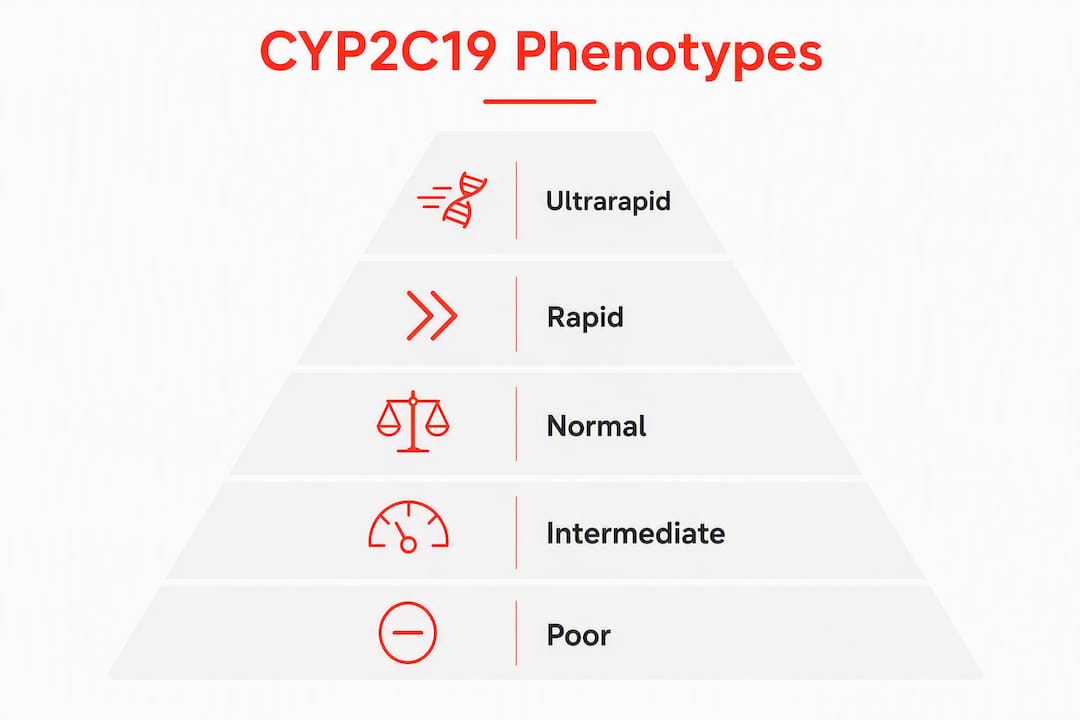
| Functional Class | Representative Alleles | Example Diplotypes | Phenotype | Clinical Relevance |
|---|---|---|---|---|
| Increased function | *17 | *1/*17, *17/*17 | Rapid/Ultrarapid Metabolizer (RM/UM) | Higher active metabolite; clopidogrel generally effective; monitor for bleeding with some agents |
| Normal function | *1 | *1/*1 | Normal Metabolizer (NM) | Standard clopidogrel response; no dose adjustment indicated |
| Decreased function | *2, *3, *8 | *1/*2, *1/*3 | Intermediate Metabolizer (IM) | Reduced activation; CPIC 2022 upgraded recommendation to strong for alternative therapy in ACS/PCI |
| No function | *2, *3 | *2/*2, *2/*3, *3/*3 | Poor Metabolizer (PM) | Minimal active metabolite; FDA boxed warning; strong recommendation for alternative P2Y12 inhibitor |
| No function + increased | *2 + *17 | *2/*17 | Intermediate Metabolizer (IM) | *17 does not fully compensate for *2; still classified IM per CPIC |
Required fields in every clinical CYP2C19 report:
- Patient identifiers and specimen accession number
- Test method and complete list of alleles interrogated
- Detected star alleles (genotype call)
- Diplotype (e.g., *1/*2)
- Assigned phenotype with the translation rule applied
- Phenotype-based therapy recommendation with guideline citation (CPIC 2022, AHA 2024, or FDA label as appropriate)
- Strength of evidence for the recommendation
- Assay limitations statement (alleles not covered, CNV status, population scope)
Pro Tip: *The most common allele-calling pitfall is the *2/*17 diplotype. Because *17 increases function and *2 eliminates it, labs sometimes report this as NM. CPIC classifies *2/17 as IM, not NM, because the net functional effect is reduced. State this explicitly in your report's limitations or interpretation note, and confirm your software applies the CPIC translation table rather than a simple additive model.
Rare alleles not included in a targeted panel represent a second common gap. If your panel covers only *2, *3, and *17, a patient carrying *4, *5, *6, or *8 will be misclassified as NM. Document covered alleles explicitly and note that rare variants outside the panel were not assessed.
How prevalent are CYP2C19 loss-of-function alleles across ancestral groups?
Loss-of-function (LOF) allele frequency varies substantially by ancestry, and that variation has direct implications for preemptive testing yield and for interpreting results in diverse patient populations.
MedlinePlus Genetics and the NCBI summary both note that CYP2C19 LOF alleles, particularly *2 and *3, are significantly more common in East Asian populations than in European or African populations. The *3 allele, which is rare in European populations, accounts for a meaningful share of PMs in East Asian patients. African-ancestry populations carry *2 at intermediate frequencies and also carry *17 at higher frequencies than European populations, producing a distribution of phenotypes that differs from what most early clopidogrel trial cohorts captured.
Prevalence implications for your testing program:
- PM frequency is approximately 2–4% in European-ancestry populations, 13–23% in East Asian populations, and intermediate in South Asian populations, based on published allele frequency data.
- IM frequency is substantially higher across all groups, often 25–35% in European-ancestry cohorts, making IMs the largest group affected by the CPIC 2022 recommendation upgrade.
- UM frequency is highest in African-ancestry populations due to elevated *17 frequency; clinical significance of UM status for clopidogrel is less certain but relevant for bleeding risk assessment with alternative agents.
- Ancestry-aware interpretation does not mean applying different clinical thresholds. It means understanding that the prior probability of finding a LOF allele differs by population, which informs cost-effectiveness modeling and preemptive testing prioritization.
For ACS/PCI populations specifically, the high IM prevalence across all major ancestry groups means that a substantial fraction of any unselected PCI cohort will carry at least one LOF allele. That prevalence, combined with the clinical stakes of inadequate platelet inhibition post-stent, is the primary justification for broad preemptive or reactive testing programs in cardiovascular settings.
What the clinical evidence shows about CYP2C19 genotype and clopidogrel outcomes
The evidence base is consistent in direction and has grown substantially in strength over the past decade. Pharmacokinetic and pharmacodynamic studies established the mechanism; large observational cohorts and pragmatic implementation trials confirmed the outcome signal; and meta-analyses now provide the pooled estimates that underpin guideline recommendations.
CPIC's 2022 update synthesizes meta-analyses of randomized and pragmatic trials showing that alternative P2Y12 therapy (prasugrel or ticagrelor) reduces MACE by approximately 30% in CYP2C19 LOF allele carriers compared with clopidogrel (pooled RR ~0.7). Critically, genotype-guided prescribing achieves this ischemic benefit without the excess bleeding that accompanies universal escalation to stronger agents, because normal metabolizers remain on clopidogrel.
Pivotal evidence landmarks:
- Pharmacokinetic/PD studies: Dose-escalation research demonstrated that CYP2C19 PMs required up to 300 mg daily to approximate the active metabolite exposure seen in extensive metabolizers on standard 75 mg dosing, establishing that simple dose escalation is not a practical universal solution.
- TRITON-TIMI 38 and PLATO substudy analyses: Genotyping of trial participants confirmed that LOF allele carriers on clopidogrel had higher MACE rates, while those randomized to prasugrel or ticagrelor did not show the same genotype-dependent outcome gradient.
- IGNITE network: Pragmatic implementation data from multiple US health systems showed that genotype-guided prescribing was operationally feasible and associated with reduced ischemic events in LOF carriers.
- CHANCE-2 (China): A randomized trial in minor stroke/TIA patients showed that ticagrelor plus aspirin reduced stroke recurrence compared with clopidogrel plus aspirin specifically in CYP2C19 LOF carriers, extending the genotype-guided evidence base to the neurovascular setting.
- JACC/interventional cardiology cohorts: Large PCI registries confirm that LOF allele carriers on clopidogrel have differential MACE rates, supporting the ACS/PCI population as the highest-priority testing target.
Evidence-level summary:
- Pharmacokinetic/PD: Strong and consistent across multiple studies; mechanism is well-established.
- Observational cohort outcomes: Consistent direction; confounding is a limitation but effect sizes are robust.
- Pragmatic implementation trials: Demonstrate feasibility and outcome signal in real-world US settings.
- Randomized trial meta-analyses: Provide the pooled RR estimates that CPIC uses to justify strong recommendations for both IMs and PMs.
The remaining uncertainty is not about whether the genotype-outcome relationship exists. It centers on which specific clinical settings beyond ACS/PCI have sufficient evidence to mandate testing, and on the optimal management of patients with contraindications to both prasugrel and ticagrelor.
What major guidelines recommend by CYP2C19 phenotype
The CPIC 2022 guideline and AHA 2024 scientific statement are the two primary authorities for US clinical practice. The FDA clopidogrel label adds a boxed warning that reinforces the PM recommendation. DPWG guidance generally aligns but differs on IM management in some settings, which is relevant for labs serving international programs.
| Phenotype | Recommended Action (ACS/PCI) | Strength of Recommendation | Key Contraindication Notes |
|---|---|---|---|
| Ultrarapid/Rapid Metabolizer (UM/RM) | Clopidogrel at standard dose | Moderate (CPIC) | Monitor; some data suggest higher active metabolite but clinical benefit of dose reduction is unproven |
| Normal Metabolizer (NM) | Clopidogrel at standard dose | Strong (CPIC) | No genotype-based adjustment needed |
| Intermediate Metabolizer (IM) | Use alternative P2Y12 inhibitor (prasugrel or ticagrelor) | Strong (CPIC 2022 upgrade) | Prasugrel contraindicated with prior stroke/TIA; ticagrelor requires no prior stroke/TIA restriction but has dyspnea and bleeding considerations |
| Poor Metabolizer (PM) | Use alternative P2Y12 inhibitor (prasugrel or ticagrelor) | Strong (CPIC; FDA boxed warning) | Same contraindications as above; if both alternatives are contraindicated, consult cardiology/pharmacy |
Bleeding-risk tradeoffs and contraindications:
- Prasugrel is contraindicated in patients with a history of stroke or transient ischemic attack. This is a hard contraindication, not a relative one, and it is the most clinically significant prescribing boundary when choosing alternatives for neurovascular patients.
- Ticagrelor carries a higher bleeding risk than clopidogrel in unselected populations. Genotype-guided use, however, concentrates ticagrelor prescribing in the patients who will not respond adequately to clopidogrel, which the AHA 2024 statement confirms reduces ischemic events without raising overall bleeding rates across the tested cohort.
- When both prasugrel and ticagrelor are contraindicated (e.g., prior stroke/TIA ruling out prasugrel and severe dyspnea or active bleeding ruling out ticagrelor), dose-escalated clopidogrel has been studied but is not a CPIC-endorsed default. Multidisciplinary consultation is appropriate.
- DPWG considers dose escalation for IMs in some settings, but CPIC's strong recommendation for alternative therapy in IMs supersedes this for most US practices.
The CPIC/FDA/DPWG guideline comparison published by Signalpgx provides a practical reconciliation of these sources for labs that need to decide which authority to cite in their reports.
How to select, validate, and deploy a CYP2C19 assay in your laboratory
Choose an assay that covers the clinically actionable star alleles at minimum, supports copy-number variant (CNV) detection if your patient population warrants it, and can deliver results within the turnaround time your clinical service requires. That last criterion is often the deciding factor in ACS/PCI settings.
Assay types and their tradeoffs:
- PCR-based allele-specific panels (e.g., TaqMan, real-time PCR): Fastest turnaround (2–6 hours from extraction), lowest cost per sample, and easiest to validate for a defined allele set. The limitation is fixed allele coverage; alleles not on the panel are not detected.
- Targeted NGS panels: Broader allele coverage, can detect rare variants and structural variants, but turnaround is typically 24–72 hours and bioinformatics validation is more complex.
- Microarray-based platforms: High throughput, suitable for preemptive population-scale testing, but less practical for STAT ACS/PCI use cases.
- Point-of-care (POC) systems: Emerging options with 1–2 hour turnaround at or near the catheterization lab; allele coverage is typically limited to *2, *3, and *17, which captures the majority of actionable phenotypes but misses rarer LOF alleles.
Minimum recommended allele panel for clinical reporting:
| Allele | Functional Class | Reason for Inclusion |
|---|---|---|
| *2 (rs4244285) | No function | Most common LOF allele globally; drives PM/IM classification |
| *3 (rs4986893) | No function | Second most common LOF; high frequency in East Asian populations |
| *17 (rs12248560) | Increased function | Most common gain-of-function allele; required for RM/UM classification |
| *4, *5, *6, *8 | No function | Less common but clinically significant; inclusion improves PM detection |
Validation and accreditation checklist (CLIA/CAP requirements):
- Establish analytic sensitivity and specificity for each allele using characterized reference materials or cell lines.
- Document allele coverage and justify exclusions in the assay's intended-use statement.
- Enroll in a proficiency testing program (CAP PGx PT surveys are the standard for US labs).
- Validate the genotype-to-phenotype translation algorithm against CPIC reference tables.
- Maintain a complete audit trail for every genotype call, including instrument, reagent lot, and operator.
- Perform CNV assessment if your assay platform supports it; document the limitation if it does not.
Pro Tip: *For labs launching a STAT CYP2C19 service for ACS/PCI, the fastest path to clinical deployment is a validated PCR-based panel covering *2, *3, and 17 with a 4-hour turnaround. This covers the phenotypes that drive the strongest CPIC recommendations and fits within the window between hospital admission and PCI in most non-emergent cases. Expand allele coverage in a second-phase validation once the STAT service is operational.
When to test and how to operationalize results in your clinical workflow
Prioritize testing in ACS/PCI patients where the genotype result will directly change immediate therapy. That is where the evidence is strongest and where a delayed or missing result has the highest clinical cost.
1. Reactive (STAT) testing for ACS/PCI
Order CYP2C19 genotyping at hospital admission or at the time of catheterization lab activation. Target a sample-to-result turnaround of 4–6 hours to allow result availability before or shortly after PCI. When the result is not available at the time of reperfusion, apply a bridging protocol: most centers default to ticagrelor or prasugrel (if no contraindication) and reassess for clopidogrel eligibility once genotype is confirmed in NMs.
2. Preemptive testing for high-risk cohorts
Preemptive CYP2C19 genotyping, performed before any antiplatelet prescription is needed, allows the result to be stored in the EHR and retrieved at the point of prescribing. This model is particularly effective for:
- Patients with known coronary artery disease on long-term antiplatelet therapy
- Patients scheduled for elective PCI
- Health system populations enrolled in precision medicine programs
3. Point-of-care considerations
POC CYP2C19 platforms can deliver results in 1–2 hours at or adjacent to the catheterization lab, eliminating the need for central lab logistics. Allele coverage is narrower than central lab panels, so document this limitation in the report and in the CDS alert.
4. CDS integration principles
Discrete, structured genotype results (HL7 FHIR-formatted) are the foundation of effective CDS. The PGx EHR integration framework using FHIR and CDS Hooks allows the EHR to retrieve a stored genotype result and fire a prescribing alert when a P2Y12 inhibitor is ordered. Key design decisions:
- Interruptive alerts for PM and IM phenotypes when clopidogrel is ordered in ACS/PCI context
- Non-interruptive informational alerts for NM/RM/UM (result available, no action required)
- Alert text should include phenotype, recommendation, and a one-click link to the full report
- Track alert acceptance and override rates for quality improvement
Pro Tip: The most common workflow failure is a genotype result that arrives after the discharge prescription is already written. Solve this upstream: build a standing order set for ACS admissions that automatically includes CYP2C19 genotyping, and configure the EHR to flag P2Y12 prescriptions as pending until the result is acknowledged. This single operational change eliminates the majority of missed-result scenarios.
Drug interactions and non-genetic factors that affect clopidogrel response
CYP2C19 genotype explains a significant portion of clopidogrel response variability, but it is not the whole picture. Before attributing poor response to genotype alone, your interpretation should account for the following modifiers.
Common drug interactions affecting CYP2C19-mediated activation:
- Proton pump inhibitors (PPIs): Omeprazole and esomeprazole are the most potent CYP2C19 inhibitors among PPIs and have the most evidence for reducing clopidogrel active metabolite levels. Pantoprazole and rabeprazole have lower CYP2C19 inhibitory activity and are generally preferred when a PPI is clinically necessary in a patient on clopidogrel. The clinical outcome impact of PPI co-administration remains debated, but the pharmacokinetic interaction is well-documented.
- Fluconazole and other azole antifungals: Strong CYP2C19 inhibitors; co-administration can meaningfully reduce active metabolite exposure even in NMs.
- Fluvoxamine: A potent CYP2C19 inhibitor; relevant in patients with comorbid psychiatric conditions.
- CYP2C19 inducers (e.g., rifampin): Can increase active metabolite formation; clinical significance in NMs is modest but may be relevant in UMs.
- Assess the full medication list before finalizing the genotype-based recommendation. A NM on omeprazole may have functional CYP2C19 activity closer to an IM.
- Check hepatic function. Severe hepatic impairment reduces CYP2C19 activity independent of genotype; clopidogrel is generally avoided in severe hepatic disease regardless of phenotype.
- Consider adherence and formulation. Enteric-coated formulations and missed doses affect active metabolite exposure in ways that genotype cannot predict.
- Account for high platelet turnover states. Post-surgical states, thrombocytopenia recovery, and acute inflammation can increase platelet turnover, reducing the apparent effectiveness of any P2Y12 inhibitor.
- Integrate platelet function testing when available. VerifyNow P2Y12 or Multiplate results reflect the combined effect of genotype, drug interactions, adherence, and physiologic state. A PM on ticagrelor with a high P2Y12 reaction unit (PRU) result warrants a different conversation than a PM on clopidogrel with the same PRU.
Interpretation checklist before changing therapy based on genotype:
- Confirmed genotype with allele coverage documented
- Current and recent medication list reviewed for CYP2C19 inhibitors/inducers
- Hepatic function status noted
- Platelet function result incorporated if available
- Clinical indication and contraindications to alternatives confirmed
How Signalpgx operationalizes CYP2C19 results for labs and clinicians
A PGx reporting platform reduces time-to-action by automating genotype interpretation, linking evidence, and delivering EHR-ready reports without requiring manual curation for every result. The genotype-to-guidance pipeline that Signalpgx supports covers the full workflow from raw genotype call to clinician-facing report and CDS alert.
Core platform capabilities labs need for CYP2C19 reporting:
- Standardized genotype-to-phenotype translation aligned with CPIC 2022 reference tables
- Living reanalysis that automatically updates recommendations when CPIC, AHA, or FDA guidance changes, without requiring manual report regeneration
- Evidence-graded recommendations drawing from 20+ curated sources, with citations embedded in every report
- FHIR/HL7 integration for discrete result delivery to EHR and CDS Hooks triggering
- White-label report infrastructure so your lab's brand and medical director appear on every report
- Audit trail for every interpretation decision, supporting CLIA/CAP documentation requirements
- HIPAA-compliant data handling with GDPR-ready controls for labs serving international populations
Concrete workflow example with Signalpgx:
Sample received at lab → Genotype call completed by validated assay → Result ingested by Signalpgx platform → Automated phenotype assignment and evidence linkage → Physician-reviewed, branded report generated → Report delivered to ordering clinician and stored in EHR → CDS alert fires when clopidogrel is ordered for an IM or PM → Prescribing decision documented and tracked.
Expected timeline for a STAT CYP2C19 pathway: 4–6 hours from sample receipt to report delivery, with CDS alert available at the time of P2Y12 prescribing.
Pro Tip: *Labs evaluating a PGx reporting platform for CYP2C19 should request a demonstration using a *1/*2 (IM) case and a *2/*17 (also IM) case. These two diplotypes are where translation errors are most common. If the platform assigns NM to *2/17, it is not applying CPIC's current translation rules, and every report it generates for that diplotype will carry an incorrect recommendation. Validation of the translation algorithm is as important as validation of the assay itself.
Signalpgx's living PGx report architecture means that when CPIC publishes a future update, stored results are reanalyzed against the new guidance automatically, and clinicians receive updated recommendations without waiting for a re-order.
A practical CYP2C19 report template and interpretation checklist
The one-line actionable recommendation belongs at the top of every report, before any technical detail. Clinicians reading under time pressure will act on the first sentence; everything below it provides the supporting rationale.
Required report fields:
- Patient name, date of birth, MRN, and specimen accession number
- Ordering provider and date of collection
- Test method (e.g., PCR-based allele-specific genotyping) and laboratory name/CLIA number
- Alleles interrogated (complete list)
- Detected genotype (star alleles, e.g., *1/*2)
- Diplotype and resulting phenotype (e.g., Intermediate Metabolizer)
- One-line clinical recommendation (see templates below)
- Guideline citation supporting the recommendation (CPIC 2022, AHA 2024, FDA label)
- Strength of evidence for the recommendation
- Limitations statement (alleles not covered, CNV status, population scope, drug interaction caveat)
- Contact information for pharmacogenomics consultation
Sample one-line recommendation templates by phenotype:
- **NM (1/1): "This patient is a CYP2C19 Normal Metabolizer; standard clopidogrel dosing is expected to produce normal antiplatelet response. No genotype-based dose adjustment is indicated (CPIC 2022: Strong)."
- **IM (*1/*2 or 1/3): "This patient is a CYP2C19 Intermediate Metabolizer; reduced clopidogrel activation is expected. For ACS/PCI indications, use an alternative P2Y12 inhibitor (prasugrel or ticagrelor) if no contraindication exists (CPIC 2022: Strong)."
- **PM (*2/*2, *2/*3, 3/3): "This patient is a CYP2C19 Poor Metabolizer; clopidogrel activation is substantially reduced. An alternative P2Y12 inhibitor (prasugrel or ticagrelor) is strongly recommended for ACS/PCI indications (CPIC 2022: Strong; FDA Boxed Warning)."
- **RM/UM (*1/*17 or 17/17): "This patient is a CYP2C19 Rapid/Ultrarapid Metabolizer; clopidogrel activation is expected to be normal to increased. Standard dosing is appropriate; no genotype-based adjustment is indicated for clopidogrel (CPIC 2022: Moderate)."
Standard limitations statement template:
"This report covers the following CYP2C19 alleles: [list]. Alleles not included in this panel were not assessed and may affect phenotype assignment. Copy-number variation was [assessed / not assessed by this method]. This result reflects genotype only; drug interactions, hepatic function, and adherence may independently affect clopidogrel response. This report is intended to support, not replace, clinical judgment. Consult your pharmacogenomics team for complex cases."
For labs building clinically defensible PGx reports, this template structure aligns with CAP and CLIA documentation expectations and provides the evidence trail needed for audit.
Key Takeaways
CYP2C19 intermediate and poor metabolizers on clopidogrel face a measurably higher risk of MACE after ACS/PCI, and CPIC 2022 now carries a strong recommendation for alternative P2Y12 therapy in both phenotype groups.
| Point | Details |
|---|---|
| IMs and PMs require alternative therapy | CPIC 2022 upgraded the IM recommendation to strong; both IM and PM should receive prasugrel or ticagrelor for ACS/PCI if no contraindication exists. |
| Pooled evidence supports ~30% MACE reduction | Meta-analyses cited by CPIC show a pooled RR of approximately 0.7 favoring alternative agents over clopidogrel in LOF allele carriers. |
| Prasugrel is contraindicated post-stroke/TIA | When prasugrel is ruled out and ticagrelor is also contraindicated, multidisciplinary consultation is required before defaulting to dose-escalated clopidogrel. |
| Reports must include phenotype and recommendation | Every CYP2C19 report should lead with a one-line phenotype-based recommendation, full allele coverage disclosure, and a limitations statement. |
| Signalpgx automates genotype-to-report delivery | Signalpgx's platform handles phenotype translation, living reanalysis, evidence grading, and FHIR-based EHR delivery for labs building CYP2C19 reporting programs. |
What labs actually learn when they go live with CYP2C19 testing
The gap between a validated assay and a functioning clinical program is wider than most lab directors anticipate, and it is almost never a scientific problem. The stalling points are operational: EHR configuration, CDS alert design, and the medical director sign-off workflow.
The quick wins come early. A pre-PCI standing order that automatically triggers CYP2C19 genotyping on ACS admissions eliminates the most common failure mode, which is a result that arrives after the discharge prescription is written. Labs that build this order set in the first 30 days of go-live see immediate improvement in result utilization rates. The STAT pathway, once validated, tends to run smoothly because the clinical need is unambiguous and the ordering team is motivated.
EHR integration is where programs stall. Discrete FHIR-formatted result delivery requires IT engagement, and CDS Hooks configuration requires clinical informatics resources that most labs do not control directly. The practical solution is to start with a PDF report delivered to the ordering provider's inbox while EHR integration is built in parallel. This keeps the clinical program running and generates real-world utilization data that supports the business case for full integration.
Medical director sign-off is the third common bottleneck. The director needs to review and approve the genotype-to-phenotype translation algorithm, the recommendation language, and the limitations statement before the first report goes out. Preparing a validation dossier that includes CPIC reference table alignment, proficiency testing enrollment, and sample report drafts accelerates this review considerably.
90-day operational checklist for labs launching CYP2C19 reporting:
- Days 1–14: Finalize assay validation, enroll in CAP PGx proficiency testing, and draft report template for medical director review.
- Days 15–30: Complete medical director sign-off on translation algorithm and report language; build pre-PCI standing order set with clinical champions.
- Days 31–60: Go live with STAT CYP2C19 service; deliver reports via PDF or secure messaging while EHR integration is configured.
- Days 61–90: Complete CDS alert configuration and testing; track alert acceptance and override rates; present utilization data to clinical leadership.
Labs that have worked through this sequence with a PGx reporting platform report that the most common reasons programs stall are not technical but organizational: unclear ownership of the CDS configuration and insufficient clinical champion engagement before go-live.
Signalpgx helps your laboratory deploy CYP2C19-guided clopidogrel reporting
Laboratories that need to move from validated assay to live clinical reporting face a concrete infrastructure problem: building genotype-to-phenotype translation, evidence grading, report generation, and EHR delivery from scratch takes months and requires resources most labs do not have in-house. Signalpgx solves that directly.

The platform delivers white-label PGx reporting infrastructure that your lab can deploy under your own brand, typically within 5–7 days of onboarding. Every CYP2C19 report includes physician-reviewed, evidence-graded recommendations aligned with CPIC 2022 and AHA 2024, with citations embedded and a living reanalysis engine that updates stored results automatically when guidelines change. FHIR/HL7 integration connects your genotype results to EHR-based CDS alerts without custom development on your end. HIPAA compliance and full audit trail documentation are built in, supporting both CLIA workflows and CAP inspection readiness.
For labs evaluating PGx reporting platforms, the practical next step is a demonstration using real CYP2C19 diplotype cases, including the *2/*17 IM scenario that exposes translation errors in less rigorous systems. Request a demo or contact the Signalpgx team to see the platform's CYP2C19 reporting workflow end-to-end, or review the white-label PGx reporting infrastructure to assess deployment options and timelines for your laboratory.
Useful sources and where to look next
The following resources are the primary authorities for CYP2C19 and clopidogrel clinical practice in the United States. Each is annotated with its practical use case for labs and clinicians.
Primary guideline and regulatory sources:
- CPIC Guideline for CYP2C19 and Clopidogrel: 2022 Update: The definitive US clinical guideline. Provides phenotype-to-therapy recommendation tables, evidence grading, and the upgraded strong recommendation for IMs. Start here for report wording and recommendation language.
- AHA 2024 Scientific Statement on CYP2C19 Genetic Testing: Synthesizes trial and implementation data; addresses operational barriers including turnaround time and EHR integration. Essential for building the clinical case for a testing program.
- NCBI Bookshelf: Clopidogrel Therapy and CYP2C19 Genotype: Concise summary of mechanism, phenotype definitions, population prevalence, and FDA boxed warning. Useful for clinician education materials and report background text.
- FDA Table of Pharmacogenomic Biomarkers in Drug Labeling: Confirms CYP2C19 as a labeled biomarker for clopidogrel; useful for regulatory and compliance documentation.
- DailyMed: Clopidogrel Prescribing Information: Full FDA-approved label including the pharmacogenomics section and boxed warning text.
Evidence and implementation resources:
- ClinPGx Annotation of CPIC Guideline for Clopidogrel and CYP2C19: Tabulated genotype-to-phenotype mapping and recommendation matrices; directly usable for report template development and software validation.
- JACC: Clinical Impact of CYP2C19 Genotype on Clopidogrel-Based Therapy: Outcome data from PCI cohorts; supports the clinical utility argument for ACS/PCI testing programs.
- PMC: CYP2C19 Dose Escalation Study: Pharmacokinetic evidence that dose escalation in PMs is not a practical universal solution; useful for explaining why alternative therapy is preferred over higher clopidogrel doses.
- MedlinePlus Genetics: Clopidogrel Resistance: Accessible summary of genetic contributors to clopidogrel resistance; useful for patient-facing materials and clinician education.
Practical next steps for your laboratory:
Enroll in the CAP PGx proficiency testing survey before go-live. Engage your EHR clinical informatics team early to scope FHIR result delivery and CDS Hooks configuration. Identify a clinical champion in cardiology or pharmacy who will drive standing order adoption. If your lab needs reporting infrastructure rather than just an assay, evaluate a PGx reporting platform that handles genotype-to-phenotype translation, evidence grading, and EHR integration as a managed service.
This article provides general clinical and laboratory information based on published guidelines and peer-reviewed evidence. It does not constitute medical, legal, or regulatory advice. Clinicians and laboratory directors should confirm current guideline recommendations and applicable regulatory requirements with primary sources and qualified professionals before implementing testing programs or changing patient therapy.